Affordable Housing Waitlist
ResMan
Federal affordable housing regulations require properties to maintain compliant waitlists for Section 8 and similar programs—tracking applicants in proper order to ensure those who meet criteria receive the next available unit. Non-compliance results in significant financial penalties. ResMan’s existing waitlist feature, originally designed for multi-family housing, wasn’t robust enough to meet strict federal compliance requirements, creating risk for properties and limiting the platform’s value for the affordable housing market.
Role: UX Designer
Collaborating Team Members:
- Product owner
- Business analyst
- Developers
The Challenge:
Design a compliant waitlist management system that met strict federal regulations while remaining intuitive for property managers juggling complex compliance requirements. The existing multi-family waitlist lacked the functionality needed for affordable housing properties to maintain federal compliance, putting properties at risk of penalties and limiting ResMan’s market expansion.
Key constraints:
- Must support Section 8 and other affordable housing program requirements
- Need to accommodate properties ranging from small portfolios to large enterprises
- Had to work within existing system architecture and look-and-feel
- Users (compliance officers, property managers) were already using workarounds like Excel spreadsheets or competitor software
Outcome:
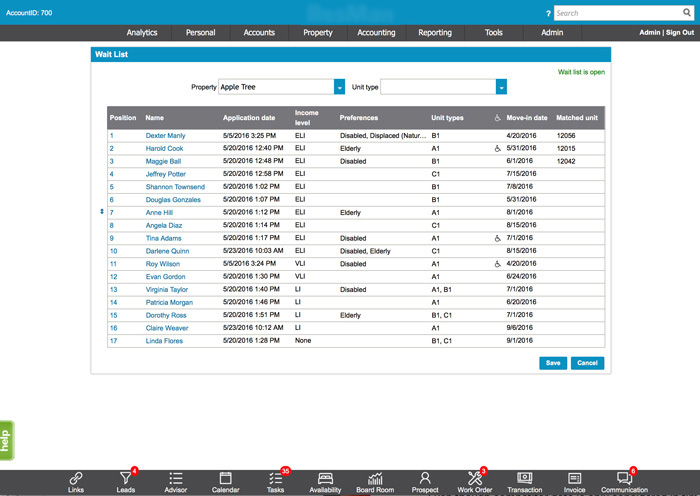
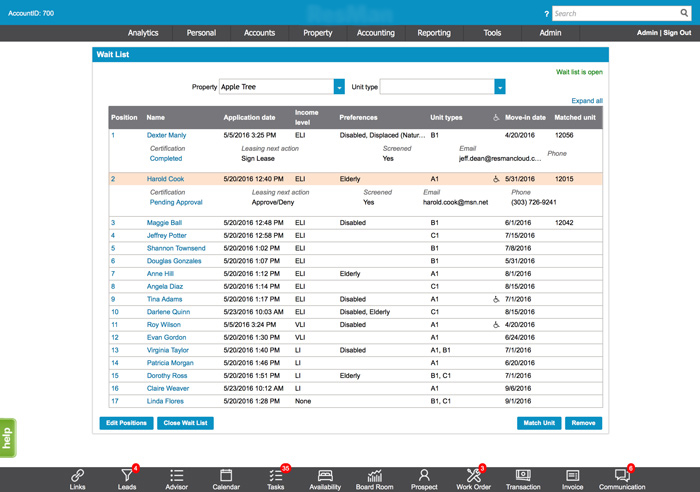
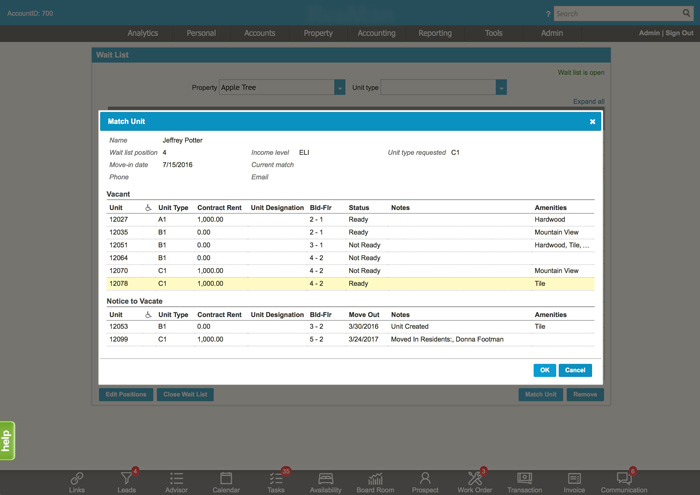
The redesigned affordable waitlist gave compliance officers and property managers the ability to track applicants while displaying critical information needed for decision-making at a glance. The solution balanced federal compliance requirements with user-friendly interface design, enabling properties to maintain compliance while reducing administrative burden.
Why This Matters for Platform Design
Building platforms for new user segments requires understanding both user psychology and business requirements. Successful platform design creates confidence through clear information hierarchy, intuitive workflows, and progressive disclosure of complex features.
research & Discovery
Six interviews were conducted with various property management staff who were responsible for maintaining the waitlist including one compliance officer. All interviews were conducted remotely. At this point, since we did not have an affordable product, all of our own client users were using different competitors. This gave us insight in how our competitors were doing it wrong.
Findings included the fact that most used either pen/paper or Excel spreadsheets to track their applicants. Several interviewees were using a competitor’s software for their property manageement needs but did not use the tools provided. Learning this was especially helpful to tease out why they were not using what should have been a more specialized and superior tool.
Most interesting was the fact that there were pain points/complaints, or at least none highlighted as such; this was how it was done and using an external tracking mechanism was easier than the property management software they were using. When it came down to it, the competitor software was not easy to access and use, it did not show them the information they needed to see, and finally, they did not trust the software with the information it did display.
Key Findings
Most users relied on pen/paper or Excel spreadsheets to track applicants. Several interviewees were using a competitor’s property management software but weren’t using the waitlist tools provided. Learning this was especially helpful for understanding why they weren’t using what should have been a more specialized and superior tool.
The real problem wasn’t the lack of features…it was trust and usability:
- The competitor software wasn’t easy to access and use
- It didn’t show them the information they needed to see
- They didn’t trust the software with the information it did display
Most interesting: there were no major pain points or complaints highlighted about the manual tracking process. Using an external mechanism was easier than the property management software they were already paying for. When it came down to it, the existing tools failed on three fundamental levels: accessibility, visibility, and trust.
Design process
Design Priorities
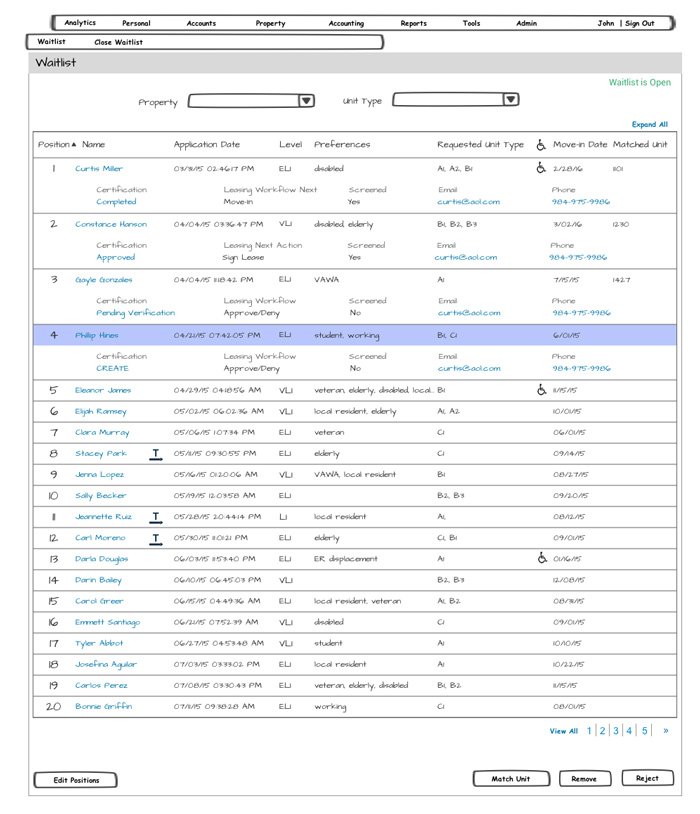
- Display critical information at a glance
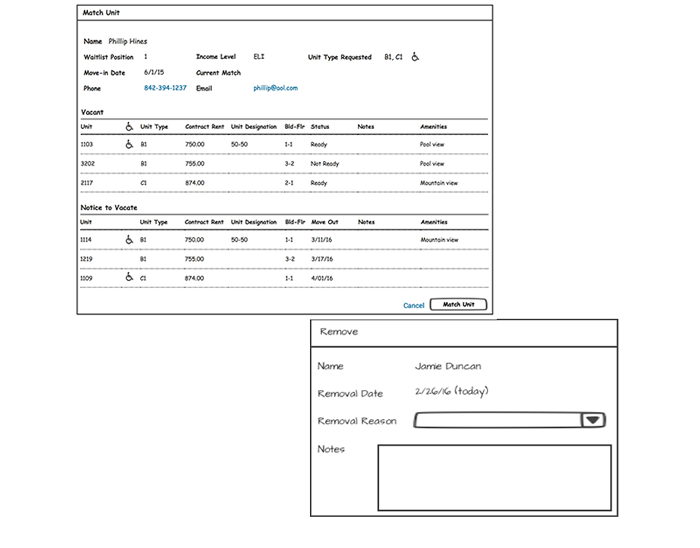
- Provide quick access to additional details
- Build trust through clarity and consistency
The key was making sure users had the information they needed visible immediately, with quick access to drill deeper when necessary.
Validation
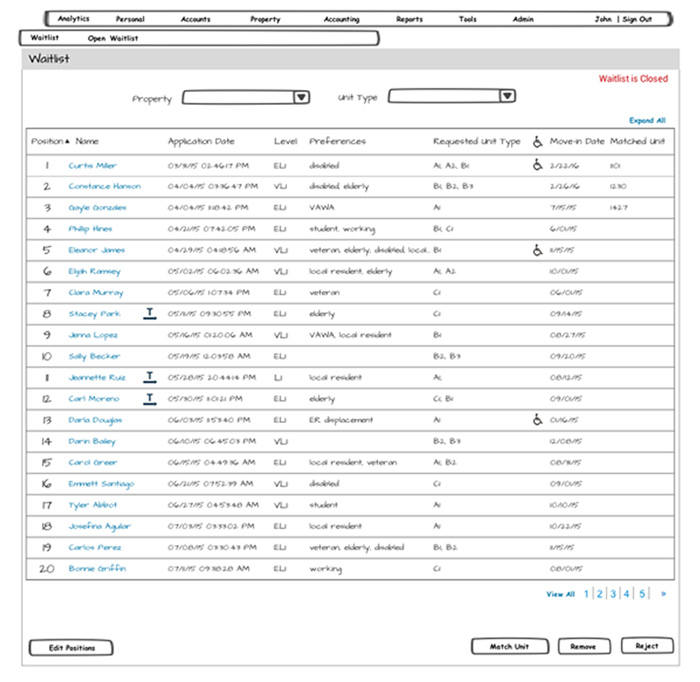
After creating wireframes, I had something tangible to test with users. I used paper prototypes to validate the design and test the most critical tasks users needed to accomplish.
Testing Focus
The key was making sure users had the information they needed visible immediately, with quick access to drill deeper when necessary.
- Can users quickly identify applicant status?
- Is critical compliance information visible at a glance?
- Can users access detailed applicant information efficiently?
After testing with several users, I made adjustments including:
- Refining button labels for clarity
- Adjusting placement of key actions for easier access
- Improving information hierarchy based on what users looked for first
Outcome
The affordable waitlist now gives users the ability to track their applicants but also see much of the information necessary to make a decision for next steps.